Food is interaction and togetherness, a social and cultural act that never stops changing. It adapts and takes new shapes, in a cyclical rhythm of returns and renewals. A perfect example is the celebration that comes back to Sicily every November 2nd: the Festa dei Morti (Feast of the Dead). It began as the Commemoration of the Faithful Departed, and Sicilians renamed it u jornu di li morti, “the day of the dead.” On this day the community celebrates with a lively, joyful festival of both folk and religious rituals.
Its roots go back to the Middle Ages, around the year 998, when Odilo, abbot of Cluny in France, set aside one day to pray for the souls of all the faithful departed. From that abbey the observance spread across most of Christian Europe and, over the centuries, far beyond. Wherever it arrived, it took on the character of the place that welcomed it. In Poland, candles light up the cemeteries for Zaduszki. In Germany and Austria, people celebrate Allerseelen. In Spain and Portugal, the memory of the dead is woven together with sweets and ritual offerings, while in Mexico it merged with ancient pre-Columbian beliefs to create the Día de Muertos.
In Sicily, this thousand-year-old commemoration has become, over time, more of a popular celebration than a religious one. It has a rich identity made of rituals and customs so deeply felt that they involve young and old alike, with children as the undisputed stars.
The celebrations begin on the night between November 1st and 2nd. According to tradition, the family’s departed relatives visit the youngest and leave them gifts. In the morning, the children search for them and unwrap them, while the adults set a table full of traditional dishes and sweets. These foods are now part of the folk tradition of the feast. Their value lies in their link to a past of stories, legends and ancient gestures, which returns every year through their flavor, a taste in which Sicilians still recognize themselves.
Among these treats, the pupi di zuccaro (or pupi di zucchero, “sugar dolls”) hold a place of honor. They are sweet figurines made with water, sugar and a pinch of cream of tartar or lemon juice. Their shapes recall popular characters such as knights, ladies, dancers and peasant women, as well as classic figures of Sicilian folklore and, in more modern versions, cartoon characters. Their origins are said to be linked to the world of puppeteers and, in particular, to the Opera dei Pupi, the traditional Sicilian puppet theater, which supposedly turned them into a typical sweet. But that is not the only story. According to one legend, they date back to the period of Arab rule, when a cook or pastry maker, inspired by the sugar figurines already used in Eastern courts, is said to have modeled knights and ladies out of sugar, which was still little known in Europe at the time.
It is in Palermo, in particular, that this tradition is still alive in both home kitchens and pastry shops. The process is complex and follows the original steps of the recipe. Everything begins with the sugar, which is dissolved and then boiled with lemon juice and glucose until it reaches the right temperature. The syrup, thick and glossy, is poured into plaster molds that have been greased with almond oil, then closed, carefully tied, and left to set in the oven. When the figures are solid and cool, the most fun part begins, the decoration, done strictly by hand, in bright colors.
But what makes them unique is not only their shape or origin. Above all, it is the strong symbolic meaning they still carry today. According to popular belief, eating them on the day of the feast lets you take in a sacred strength, both spiritual and physical. This meaning ties back to the ancient custom of preparing sweets and ritual foods for the dead, to ward off the fear of the unknown and of death, and to keep alive the bond with those who are no longer here.
The ossa di morto (“bones of the dead”) also tell the symbolic story of this day. These biscuits are made with flour, sugar, cinnamon and cloves, and they take a long time to prepare, the dough must rest for about three days in a dry place, so that the surface hardens.
Their name changes from area to area. In Palermo they are often called mustazzoli, while in other parts of Sicily they are known as scardellini or paste di garofano (“clove pastries”). In Messina they keep the traditional name ossa di morto, which comes both from their bone-like shape and from their crunchy texture. But there is more, what makes them such an iconic sweet is the belief that the dead themselves bring them to their loved ones, especially to children, on the night between November 1st and 2nd.
Alongside the sugar dolls and the ossa di morto, another symbol of the feast is the famous frutta martorana, a sweet typical of many Sicilian celebrations, made of almond paste, sugar and orange blossom water. With its unmistakable flavor, it is prepared both at home, following tradition, and in most of the island’s pastry shops. What sets it apart are its bright colors and its many shapes, made with different molds. In Palermo, for example, the most traditional ones are still made of plaster.
Another star of the feast is the tetù, a crunchy biscuit glazed with sugar and lemon, or with cocoa. According to popular explanation, the name comes from the Sicilian phrase tienili tu (“you keep them”), and it changes from area to area. In eastern Sicily, for example, they are called totò. Despite the different names, the meaning is the same, to value simple ingredients and flavors, to make use of leftovers and to recycle in the kitchen, avoiding any waste, something that often belongs to festive traditions.
What makes all these old recipes special comes together in the folk ritual that ties them together: the cannistru, a wicker basket in which they are gathered, to be found by the children when they wake up on the morning of the feast. Alongside the sweets, the basket holds seasonal fruits such as pomegranates, dried figs and chestnuts, whose colors make it as beautiful to look at as it is good to eat. It is an ancient ritual, renewed every year across Sicily, to honor the bond with the past, with the memory of loved ones, and with the roots of a thousand-year-old tradition.
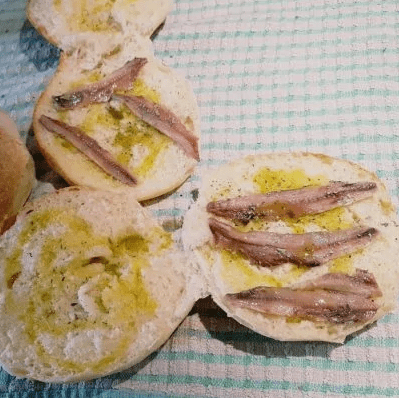
But the feast is not only about sweets. Savory dishes also have a place on the table on November 2nd, and they are an essential part of the tradition. Among the most common are the muffulette, soft rolls topped with sesame seeds and flavored with fennel or anise seeds, simply dressed with extra virgin olive oil, salt and black pepper. There are also richer versions, with anchovies or sardines, tomato, and cheeses such as caciocavallo or tuma.
According to a popular story, the origin of this food goes back to an ancient tradition, from a time when families still traveled by cart to reach the cemetery on November 2nd. The journey was long and tiring, and getting back in time for lunch was hard. So people began to bring something to eat along the way, the muffuletta, a soft, plain bread, filled with whatever was in the house, which could be enjoyed on the road. Since then, the custom has remained, and sharing this meal makes those at the table feel closer, and connected to a tradition that returns year after year.
This is how one of the humblest and most beloved foods of the feast was born, a simple roll that, for this very reason, tasted of home cooking. Today the fillings have become richer, but the meaning of the ritual is the same, a simple meal to share, which turns the visit to the dead into a peaceful, shared moment, where memory comes alive around the table.
All this shows the power of a celebratory ritual, through which a past rooted in tradition, memory and togetherness is brought back to life every year. And it is food that gives it strength, its value is measured not only by the senses of the individual, but by the shared experience of eating together, celebrating and remembering the past.

Authentic Sicilian ingredients, delivered to your door
Shop Bronte pistachios, artisan pasta, extra virgin olive oil and more on Dolceterra.com — use code SICILIANFOODCULTURE10 for 10% off your order.
If you enjoyed this article, consider supporting us with a small donation — it helps keep the site running!
 Buy us a Cannolo!