Between ice cream and sorbet: what granita really is
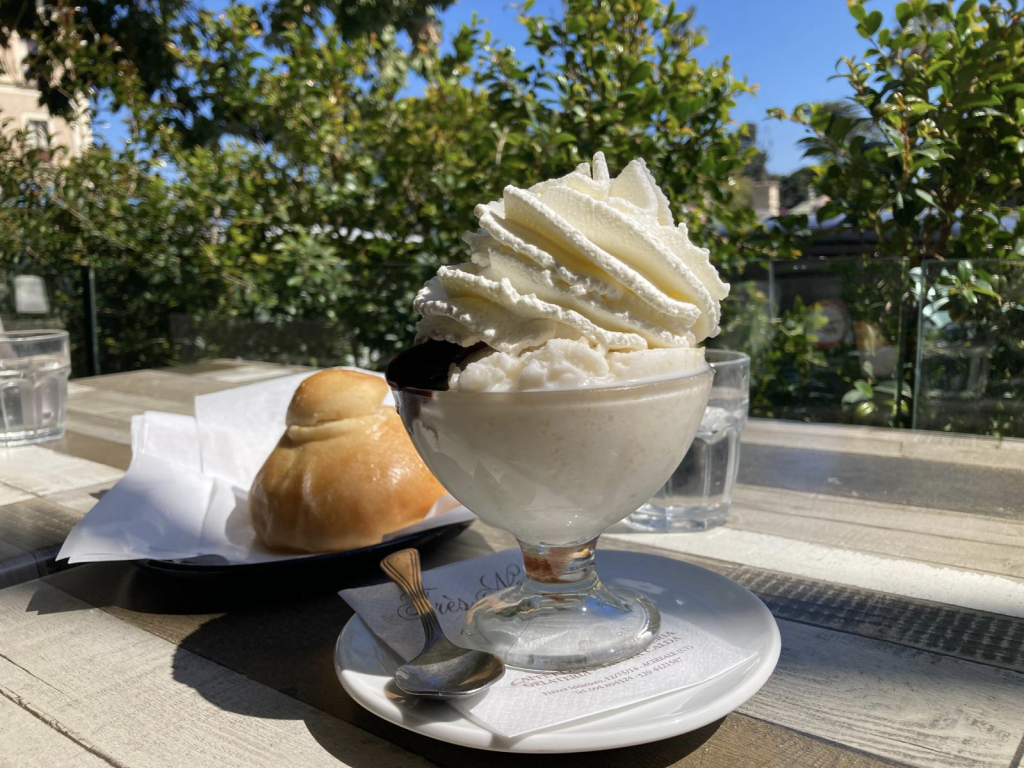
Fresh, tasty and naturally icy, sometimes a dessert, sometimes an afternoon snack or why not, even a full lunch paired with a soft brioche: yes, we’re talking about granita, the Sicilian treat you simply can’t say no to on a sweltering summer day.
Somewhere between ice cream and sorbet, granita is a one of a kind dish. Born in Sicily, it has since spread across Italy, from Bologna to Salerno, Milan to Rome and beyond , but no matter where you find it, nothing will ever quite match the authenticity of the Sicilian original.
Ancient origins: from Arab sherbet to the neviere
Its origins are ancient, dating back to the period of Arab rule in Sicily (827–1091), during which the forerunner of today’s granita first emerged: the sherbet, a refreshing iced drink flavoured with fruit juices and floral essences, which from the very beginning blended seamlessly into Sicilian customs. Its characteristics were particularly well suited to an ancient local practice: the collection and preservation of snow in the so-called neviere, underground cavities used since the Middle Ages to store ice throughout the year.
This task fell to the nivaroli, traditional workers who every winter gathered snow on the slopes of Etna, the still-active volcano in the eastern part of the island and across the ridges of the Peloritani, Nebrodi and Iblei mountains.
With the arrival of summer, the ice was extracted, compacted into large blocks and carried down to the valleys on mules or carts, packed in jute sacks that protected it from the heat. This practice allowed aristocratic Sicilian families to purchase ice and store it in their own private neviere, located in cool and sheltered spots. And it was here that the first version of granita was born: the rattata, a name that echoes the distinctive gesture of scraping the snow during preparation.
From the pozzetto to the ice cream maker
Before long, this culinary tradition evolved with the discovery that adding salt to snow could turn it into a powerful natural refrigerant. This led to the invention of the pozzetto: a simple wooden container housing a zinc bucket, in which flavoured water was churned until it froze.
The result gave the ancient rattata a new texture, far creamier and denser than the original. This evolution continued until the twentieth century, when snow was finally replaced by water, giving birth to the granita as we know it today, no longer prepared with the manual pozzetto, but with a new technology: the modern ice cream maker, essential for achieving that signature dense and creamy consistency.
It is thanks to these origins that we can today recognise granita as a true symbol of identity, one that over the centuries has managed to preserve its deep connection with simplicity and the culture of its land. Its distinctive quality lies in staying true to its original character: a handful of carefully selected ingredients, always fresh, seasonal and of the highest quality, balanced in just the right proportion with water.
These ingredients are worked following precise methods that allow very little variation: starting from a blend of water, sugar, fruit juices and seasonal fruit, the mixture is first frozen and then churned, until it reaches that granular, crystalline consistency that makes Sicilian granita truly unmistakable.
This process can still be carried out the traditional way, without the help of any machinery, simply stirring the mixture by hand until the ice crystals break down and the characteristic granita texture is achieved. Alternatively, it can be made using specialised ice cream machines, typically with a vertical paddle, which cool the mixture through refrigerant fluids. Once ready, today as in the past, granita is served at a temperature just below zero, preserving its soft, granular consistency, fresh on the palate, but never icy.
The ritual: granita and brioche col tuppo
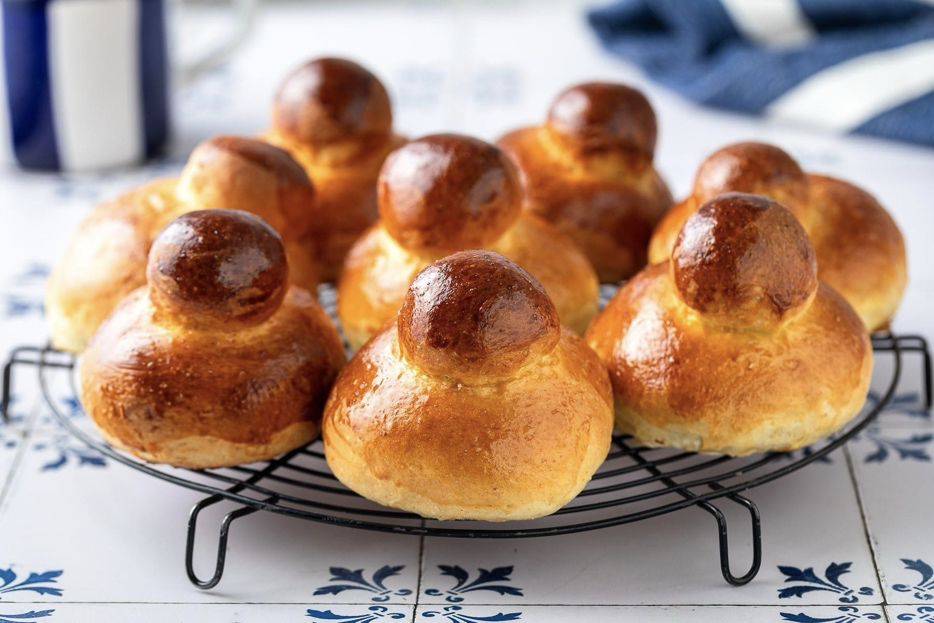
The true ritual of Sicilian granita, however, is only complete with the addition of the brioche col tuppo: a soft, lightly sweetened leavened bread, instantly recognisable by the small round “ball” on top, called tuppo, which recalls the traditional Sicilian women’s hairstyle. Served alongside the granita and used to scoop it up, the brioche is an essential accompaniment that brings a slow, almost ceremonial quality to the experience, making every bite even more irresistible. And it is this distinctive element that unites the many variations of Sicilian granita which, from city to city and from north to south of the island, each tell their own story through differences in flavour, texture and appearance.
The classic flavours of Sicilian granita
Wherever you are in Sicily, there are certain flavours that are essential to recognising a true Sicilian granita. Lemon, one of the most widespread citrus fruits across the island; almond, known as minnulata, distinguished by its flat, elongated shape and the prized varieties grown in the eastern part; black mulberry, a beloved local icon prized for its intense flavour and hardy nature; and coffee, strictly strong and dense, as tradition on the island demands.
A tale of four cities: Messina, Catania, Syracuse and Palermo
Over time, and depending on the location, creative new flavours have joined the mix, prickly pear, melon, or mint among them. But each town has its own soul: in Messina, granita has a grainy, creamy consistency, and the most popular flavour is coffee, prepared in local bars with an espresso machine and paired with a generous dollop of cream, which softens its intensity and rounds out the final flavour.
Moving towards Catania, granita takes on a character all of its own: the texture is unlike any other variety, creamier, and in many ways closer to ice cream. The flavours on offer are plentiful: lemon is a constant, joined by black mulberry, peach, almond and of course pistachio from Bronte, a small town nestled on the slopes of Etna. The undisputed favourite, however, is almond, enjoyed by many with a splash of hot coffee, a combination locals simply can’t resist. Here, as elsewhere, this traditional and symbolic dessert is so well-established that it’s present everywhere: from bars to restaurants to pastry shops, where it represents a staple of Sicilian gastronomic culture.
In the city of Syracuse, granita is prepared with a fine, velvety texture, combining a creamy base with imperceptible ice crystals. The most representative flavors are local lemon and almond, produced with the prized Avola pizzuta variety, from the town of the same name near the city.
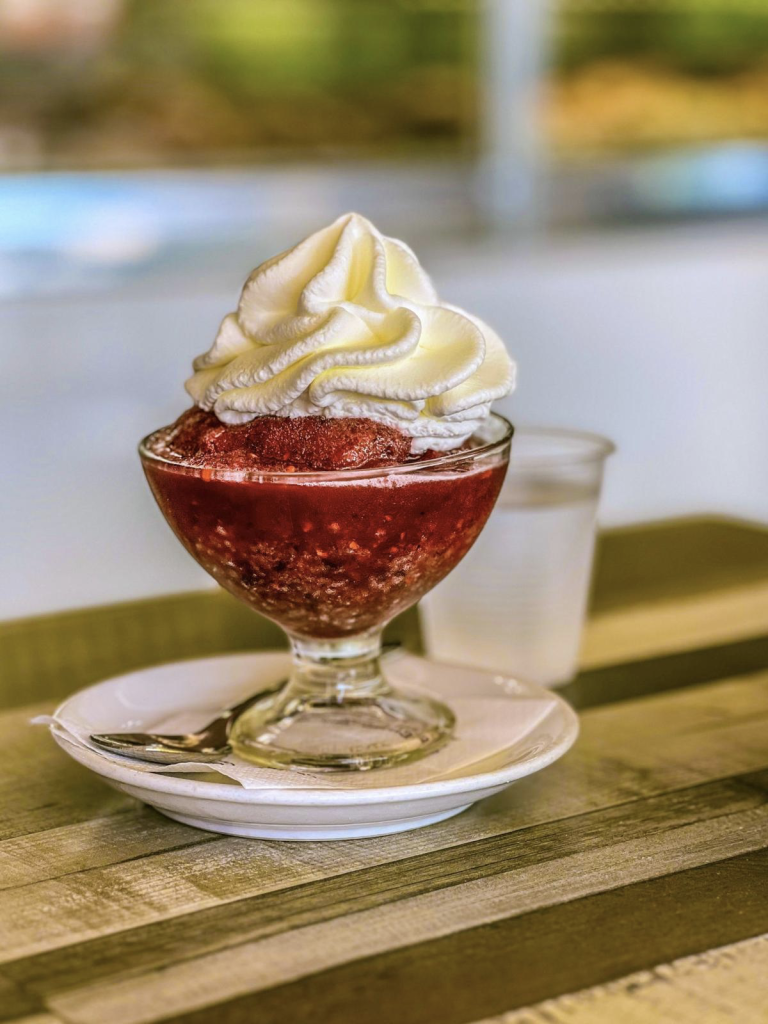
Sitting somewhere between these two versions, different in texture and preparation, is the granita from Palermo, particularly light and refreshing, with well-defined, visible ice crystals. The most typical flavours are lemon, almond, coffee and black mulberry, but Palermo also offers two extraordinary combinations: jasmine and cinnamon. These are ancient pairings of Arab origin, still faithfully reproduced today in the city’s most historic bars.
And it really is true: tell me where you’re going and I’ll tell you what granita you’ll taste. Yet for all its variations, granita remains a unifying symbol across the whole of Sicily, telling the story of the island’s rich and diverse identity through its form, its flavour and its appearance. Its goodness and uniqueness have kept alive an ancient, authentic daily ritual, shared by everyone and marked by a slow, collective, unhurried rhythm.

Authentic Sicilian ingredients, delivered to your door
Shop Bronte pistachios, artisan pasta, extra virgin olive oil and more on Dolceterra.com — use code SICILIANFOODCULTURE10 for 10% off your order.
If you enjoyed this article, consider supporting us with a small donation — it helps keep the site running!
 Buy us a Cannolo!