Pastry chefs and chefs, as we know, are two different professions, requiring non-overlapping skills and, above all, very different sensibilities. Yet in Sicily, both enjoy offering an interesting reinterpretation of original recipes, symbols of the island’s identity and gastronomic traditions. As Italian semiotician Paolo Fabbri writes, cuisine is a total work of art, encompassing the entire process that begins with the preparation of raw ingredients and continues through their transformation in the kitchen. This process extends into the dining room, where the whole restaurant environment becomes part of the gastronomic experience.
An idea that finds confirmation in the ongoing reinterpretations of Sicily’s most iconic recipes, now increasingly widespread in the island’s restaurants and trattorias, where traditional dishes are transformed into true works of art. A well-known example of this trend is the famous “deconstructed cannolo,” a reinterpretation of the traditional and characteristic dessert, a symbol of Sicilian pastry-making, made with ricotta flavored with cinnamon, orange zest, and chocolate chips.
Unlike many other Sicilian desserts, the cannolo in its original form is one of the most uniform recipes. Throughout much of the region, the shape is almost always the same, as is the filling and topping: candied cherry or orange, a choice based on the individual pastry chef’s preferences rather than a specific geographical tradition. The most notable variations concern only the dimensions: the cannolo from the Sicilian town of Piana degli Albanesi, for example, can reach 25 cm, compared to the 10 cm of a standard, while the one from Dattilo, a small town in the province of Trapani, is distinguished by its very wide ends. On the contrary, contemporary reinterpretations come in many different forms and contribute to reshaping its identity, also calling into question its name and meaning: the “cannolo”, understood as a cylindrical tube on which the pastry is traditionally wrapped before frying, in fact loses this characteristic and, with it, its original function.

Some serve it with a spoon, others offer it as a single portion to eat by hand, while others present it as a plated dish to be enjoyed with cutlery. In all its variations, it has become a true creative challenge, a way to measure skill and distinguishing professionals in the sector. What changes above all is its visual appearance, which transforms its recognisability; what remains unchanged, however, is the taste, which stays true to tradition thanks to the use of the original ingredients: ricotta, flour, and eggs.
An aesthetic transformation that, for those who enjoy it, is anything but marginal. For two reasons: in the most common versions, deconstructing the cannolo, whether it’s a spoon dessert or a composition in which the wafer is broken into pieces, inevitably changes its texture. But there’s more: breaking it down allows you to portion each bite to your liking, combining the desired amount of ricotta and wafer, something that is not possible with a whole cannolo.
But the cannolo is not the only dessert that puts Sicilian pastry chefs’ skills to the test. Challenging their creativity is also the undisputed symbol of Easter: the Sicilian cassata. Contemporary reinterpretations of cassata follow a similar principle to those of the cannolo and mainly concern its form and structure. Traditionally circular and symbolically linked to the Sun and the Resurrection of Christ (Farina 2009), the dessert is now revisited in a contemporary key, with its elements deconstructed and presented in a glass or in creatively plated dishes.
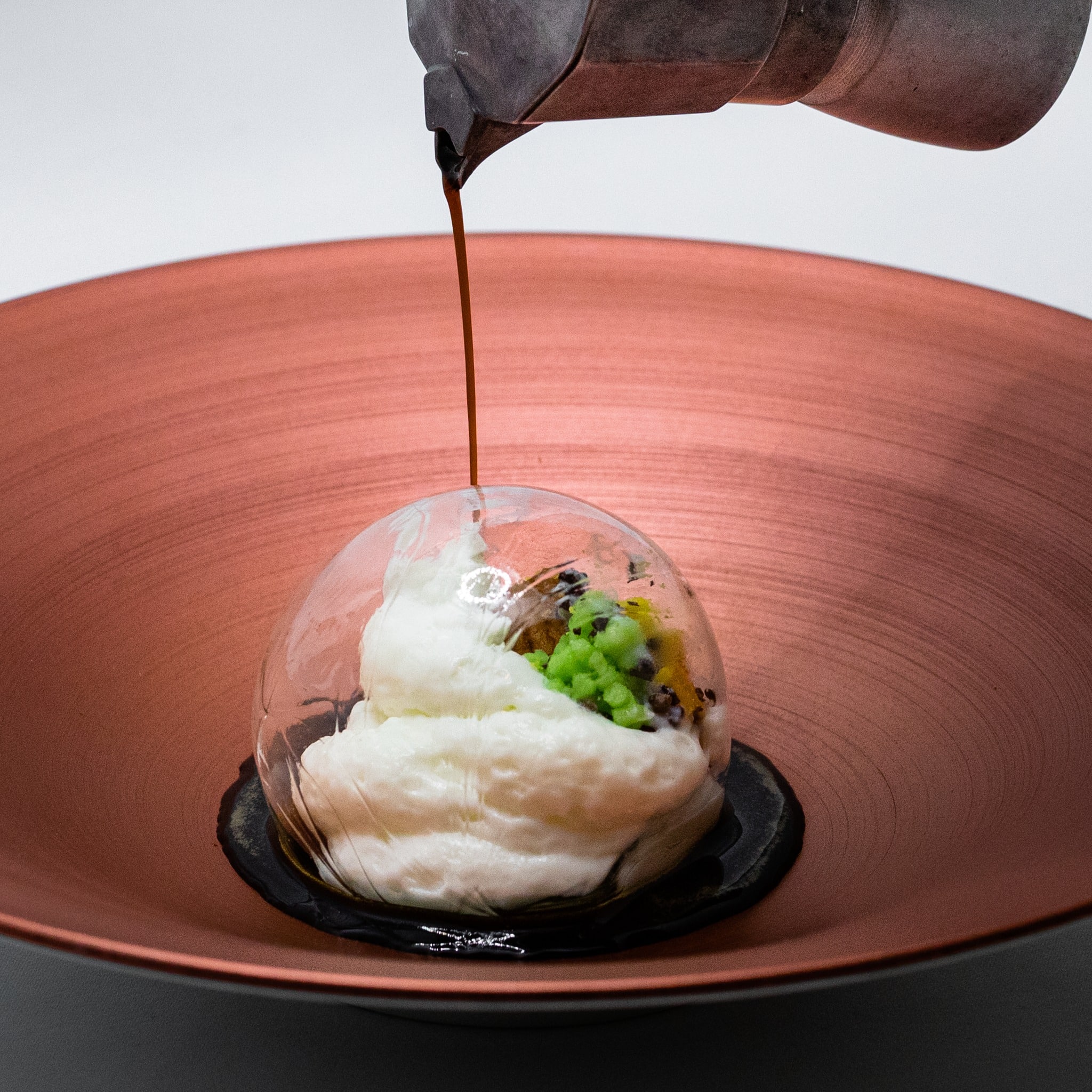
The ingredients, however, remain faithful to the original Sicilian recipe: sponge cake, sheep’s milk ricotta, candied fruit, marzipan, and sugar icing—key elements that preserve the dessert’s traditional meaning and value. What changes instead is the tactile experience of tasting cassata, resulting in a different texture and smoothness. Among the most radical and contemporary reinterpretations is that of Palermo-based Michelin-starred chef Tony Lo Coco, who pushes transformation to the very limits of recognizability. In his version, cassata is transformed into a foaming cream, no longer simply deconstructed as in spoon desserts, but also enclosed within a glossy, transparent sphere that the chef himself compares to a Christmas tree bauble. Thus, the original dessert becomes a new aesthetic object, enriching Sicily’s gastronomic heritage.
The creativity of Sicilian pastry chefs extends beyond cannolo and cassata, reaching perhaps its peak in granita, the quintessential summer dessert. Positioned between sorbet and ice cream, its traditional version—particularly widespread in the Catania and Messina areas—comes in three main flavours: almond, lemon, and strawberry, all made with strictly local ingredients tied to the territory and its seasonal cycles.
Today, granita has been reinterpreted by more experimental chefs as a complex preparation based on unconventional pairings. One example is the “Gin Tonic” version, made with Hendrick’s gin, cucumber, and mint. While departing from tradition, it maintains the essential structure of the original preparation—water, lemon juice, sugar, and starch—introducing new aromatic elements.
Other variations include those prepared in Messina with prosecco and tabacchiera peach, a native Sicilian variety, as well as versions using mango or avocado, fruits now cultivated in Sicily due to increasingly tropical temperatures. Despite this growing range of interpretations, granita remains rooted in Sicilian identity through its continued use of local ingredients.
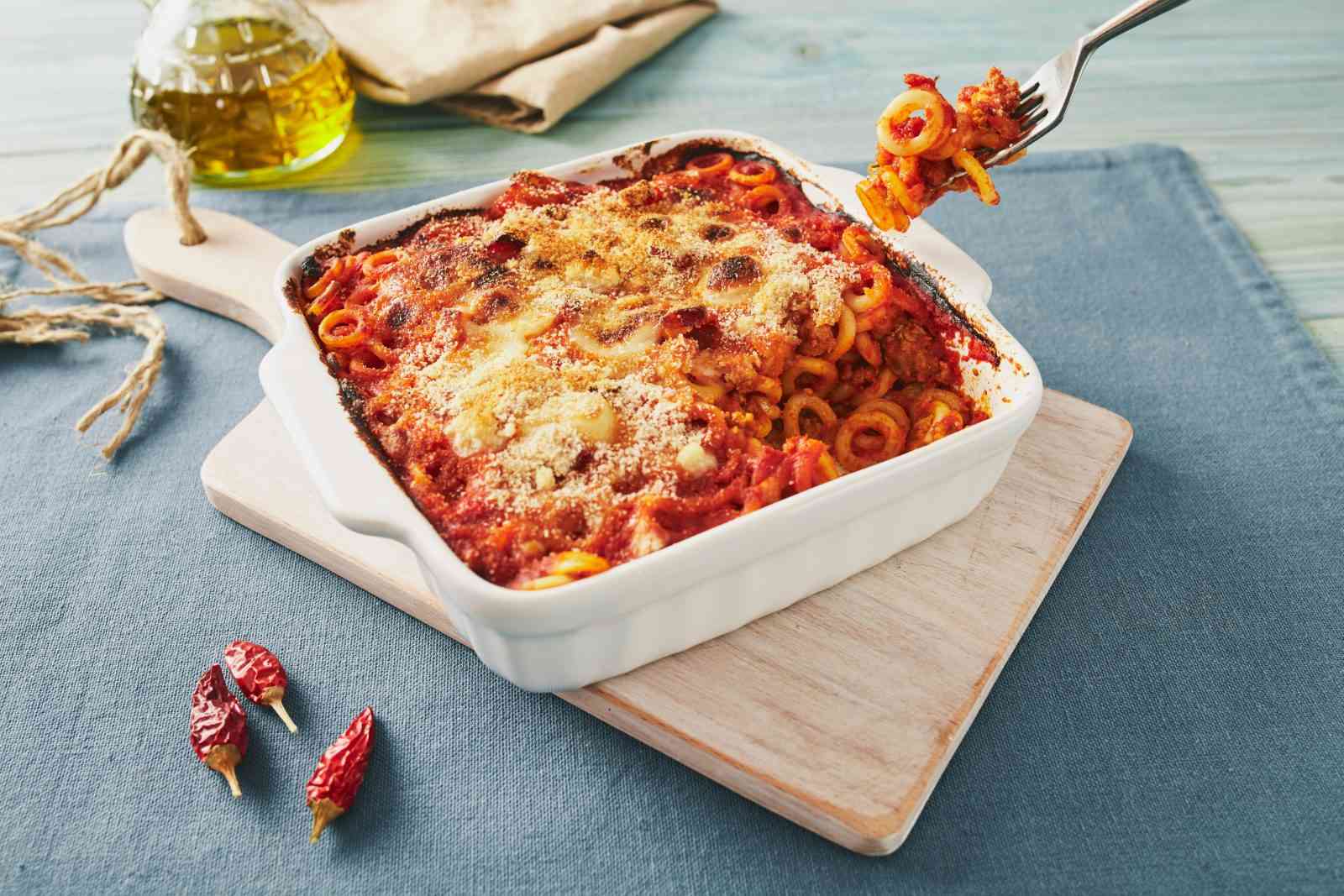
From sweets, we now move on to savoury dishes, which are equally rich in the Sicilian culinary repertoire and the subject of continuous reinterpretation by local chefs. A notable example is baked anelletti pasta, a traditional Sicilian recipe prepared in its original form with meat ragù, tomato sauce, and cheese. Although now widespread and reproduced throughout Italy, the dish retains its most authentic identity through its connection to Sicily, its place of origin, where it continues to be passed down from generation to generation.
Here, the recipe is reinvented in multiple variations, including contemporary reinterpretations that give it a new, extra-domestic meaning, moving it away from its traditional family setting. Among the most experimental and complex are baked anelletti with fish ragù, fish roe sauce, and a crispy ginger and lemon wafer.
Despite its many reinterpretations, however, the symbolic value of baked anelletti remains unchanged: a dish that, in Sicilian culture, is associated with celebration, conviviality, and both domestic and collective ritual. A constant presence at Sunday lunches, both at home and in restaurants, it continues to evoke a sense of rest and sharing.
No overview of culinary reinterpretations would be complete without the celebrated pasta alla Norma, must of Sicilian cuisine and a key feature on the menus of most traditional trattorias.
The original recipe has ancient origins, believed to be linked to a popular anecdote that explains its name while also highlighting its uniqueness.
The ingredients are simple and authentic, yet carefully balanced through essential culinary techniques: tomato sauce, strictly seasoned with garlic and basil, accompanied by fried eggplant, soft on the inside and lightly crisp on the outside. Finally, grated salted ricotta is added as a finishing touch before serving. The dish is typically prepared with a pasta shape that holds the sauce well without falling apart: usually rigatoni, bucatini, or spaghetti, depending on local tradition. In this way, Norma is established as a traditional, universal, and authentic dish, prepared in an extremely structured and seemingly rigid manner, with little openness to reinterpretation.
And yet, no chef seems willing to miss the opportunity to reinterpret it. While keeping the same ingredients, many propose new preparation methods and plating styles, turning pasta alla Norma, a culinary symbol of Sicily, into a gourmet dish capable of engaging with contemporary cuisine. The most common reinterpretations focus on two of the ingredients that define the sauce: eggplant, reworked into different textures compared to the original, and garlic, which in many versions is either accompanied or replaced by onion.
These variations are so widely shared that they become recurring elements, enriching the dish’s identity with new culinary forms and visual aesthetics.
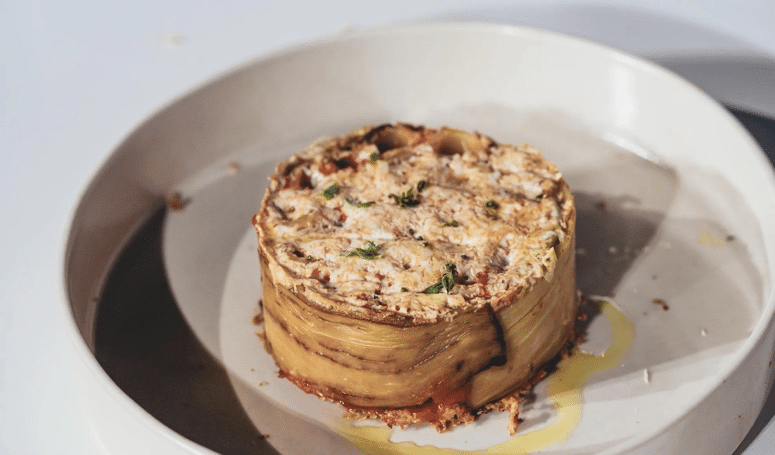
Among the most interesting is the version by Pino Cuttaia, Michelin-starred chef from Licata, who reinterprets pasta alla Norma starting from its very ingredients. Instead of traditional tomatoes, he uses datterino tomatoes, renowned for their sweetness and juicy flesh, cooked with eggplant and onion. The onion is sautéed not in oil, as tradition dictates, but in water, a choice that lightens the dish’s overall intensity.
But it is in the plating that Cuttaia’s version truly stands out: the eggplant is no longer just an ingredient in the sauce, but becomes the outer layer of the dish, enveloping the filling in a compact and elegant cylindrical shape that adds a new aesthetic value. This construction naturally also affects the tasting experience, giving the dish a new texture.
In other versions, however, the relationship is reversed. The eggplant, from being a casing that gathers and contains the pasta, becomes the very heart of the dish, wrapped and embraced by the pasta acting as its shell. The sense of abundance and conviviality inherent in the dish’s popular identity is thus reinterpreted through a minimalist preparation, designed to be eaten in a single bite.
In this way, each ingredient is made recognisable through plating and assembly techniques that deconstruct the dish into its components, while at the same time reaffirming its authenticity.
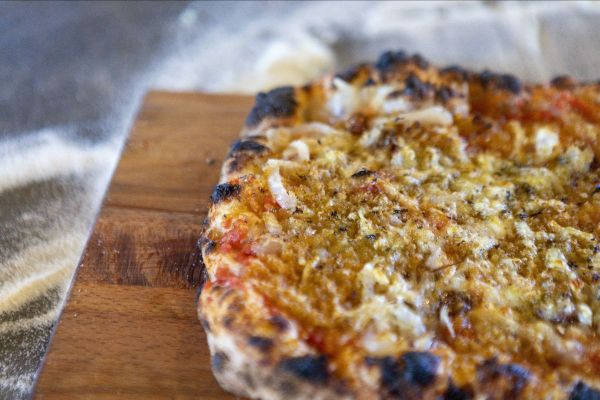
Finally, another undisputed protagonist of this culinary reinterpretation journey is Sicilian sfincione, a much-loved street food that no chef seems able to resist reimagining. Tracing back its origins, the most famous version is the Palermo one, made with a thick and soft dough, topped with tomato sauce, onion, anchovies, caciocavallo cheese, and oregano, and finished with a generous layer of toasted breadcrumbs on top. Yet, as often happens in Sicilian cuisine, each area of the island claims its own version.
In Bagheria, a town near Palermo, sfincione is prepared in a white version, without tomato, and topped with onion, anchovies, fresh tuma cheese, and oregano, in what many consider to be the oldest variation. In Messina, however, the dough is thinner and more similar to focaccia, resulting in a crispier and drier texture. Finally, in the Trapani area and the Belice Valley, dried tomatoes and local cheeses are added, further evidence of how a seemingly simple dish like sfincione, through its many variations, reveals the richness of Sicilian heritage.
Today, these variations are reshaping its meaning, shifting it towards a form of consumption that is no longer popular but gourmet: a new concept of sfincione that combines local tradition and culinary innovation.
Not eaten anymore standing up, quickly and informally as is typical of street food, but reinterpreted as a main course to be enjoyed carefully in more refined settings, it marks the gradual disappearance of its original ritual of consumption.
The main Sicilian sfincione variations introduce preparation methods and pairings not foreseen in the traditional version: from the choice of flours, often ancient Sicilian grains, to the dough-making process, characterised by long fermentation times that give the dish a more complex texture and a renewed crispness.
These elements are accompanied by a reinterpretation of the condiments: the tomato sauce becomes more concentrated and less intrusive, while the traditional combination of anchovies and cheese is often lightened or reformulated through the use of selected ingredients. The range of combinations is further expanded to include prized types of fish, such as cod or bottarga, paired with various local cheeses and vegetables, creating a new and refined balance of flavours.
Here too, the ingredients of sfincione no longer merge into a single topping, but remain distinct thanks to a more careful assembly process that enhances their identity in both taste and appearance. Baking also plays a key role, with temperatures and timings carefully calibrated to achieve a soft yet well-structured base and a surface capable of developing more complex aromatic notes.
Among the most interesting is the version of sfincione created by Sicilian pizzaiolo Gioacchino Gargano, made with innovative doughs and local ingredients such as Aspra anchovies and tuna preserved in oil, accompanied by black cabbage and oven-roasted datterino cherry tomatoes.
The result is a sfincione that retains references to the memory of its original taste, while reorganising them into a new balance, more focused on the definition and refinement of flavours, the quality of the ingredients, and the overall coherence of the dish.
What has emerged clearly is that the many reinterpretations of Sicilian cuisine share two key elements: the method of preparation and the presentation. These practices, while departing from the traditional ones, contribute to renewing and keeping Sicilian recipes alive through an ongoing process of evolution. Each dish thus finds its own balance, becoming an expression of the fusion between tradition and innovation.

Authentic Sicilian ingredients, delivered to your door
Shop Bronte pistachios, artisan pasta, extra virgin olive oil and more on Dolceterra.com — use code SICILIANFOODCULTURE10 for 10% off your order.
If you enjoyed this article, consider supporting us with a small donation — it helps keep the site running!
 Buy us a Cannolo!