Sicilian Soups: An Ancient and Timeless Dish
Among the most beloved dishes of the Sicilian tradition there are without doubt the minestre, of which the island’s cuisine preserves an extraordinary variety.
It is a dish present in the tradition of many countries, above all in the Mediterranean basin, where it is generally prepared with vegetables, legumes, grains, pasta or rice cooked in broth.
In Sicily in particular, the minestra represents an ancient and timeless dish, one that for centuries has occupied a central place in the gastronomic tradition of the territory. In earlier times, for the poorer classes it often constituted the only course of the daily meal: a simple, nourishing and economical food, born from the capacity of peasant cooking to transform a few available ingredients into a substantial and shared dish. It is precisely for this reason that the minestra was long considered a dish “of necessity”, tied more to nutritional need than to the pleasures of the table. And yet, over time, this very simplicity has transformed itself into one of the most authentic and defining traits of the island’s gastronomic tradition.
The Minestra: A Dish Beyond Classification
Today, in contemporary gastronomy, the term “minestra” embraces different types of preparation: it denotes both a category of first course, as opposed to “pasta asciutta”, and a complete dish in itself, placed alongside broths and soups. Food historian Alberto Capatti attempts to bring clarity, identifying in the minestra the single dish par excellence. By bringing together different ingredients in a single portion, each with its own cooking times, the minestra condenses the entire meal: with the same produce and the same quantities with which several separate courses might be served, it offers instead just one, complete and nourishing.
And it is perhaps precisely this difficulty of classification that reveals the true nature of the minestra, a dish so deeply rooted in local Sicilian traditions as to have generated, over time, a variety of forms almost impossible to contain within a single definition.
Its variants are numerous and typically local: ranging from vegetable minestrone to meat or vegetable broths, from minestre with pasta and legumes to those based on bread and tomato, such as the Sicilian gazpacho, through to preparations with crushed legumes, of which the macco is the most emblematic example. Beyond type, the minestre also differ by season and by function, often tied to the calendar of popular feast days. This is the case, for example, of the ritual minestra di San Giuseppe, made with dried legumes such as chickpeas and beans, prepared for the occasion as a symbolic, convivial and representative dish.
Tenerumi: A Profoundly Local Ingredient
Among such variety and difference, however, one minestra remains the archetype par excellence of Sicilian cuisine: the iconic minestra with tenerumi, also known as “pasta con i tenerumi” or “minestra coi tenerumi e cucuzze”, a defining symbol of the island and of its most authentic domestic tradition.
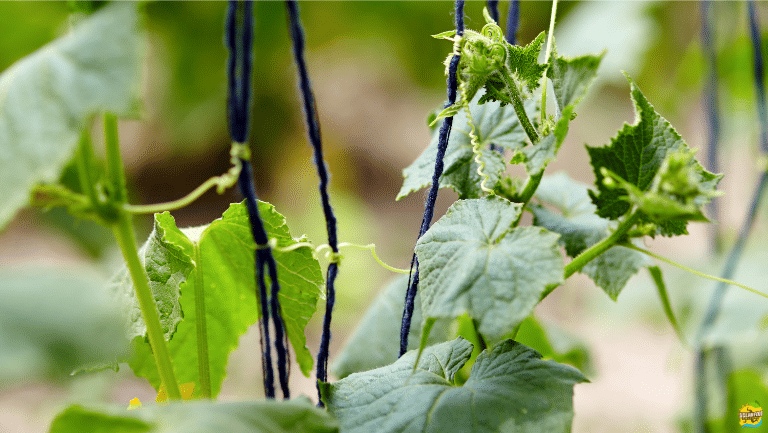
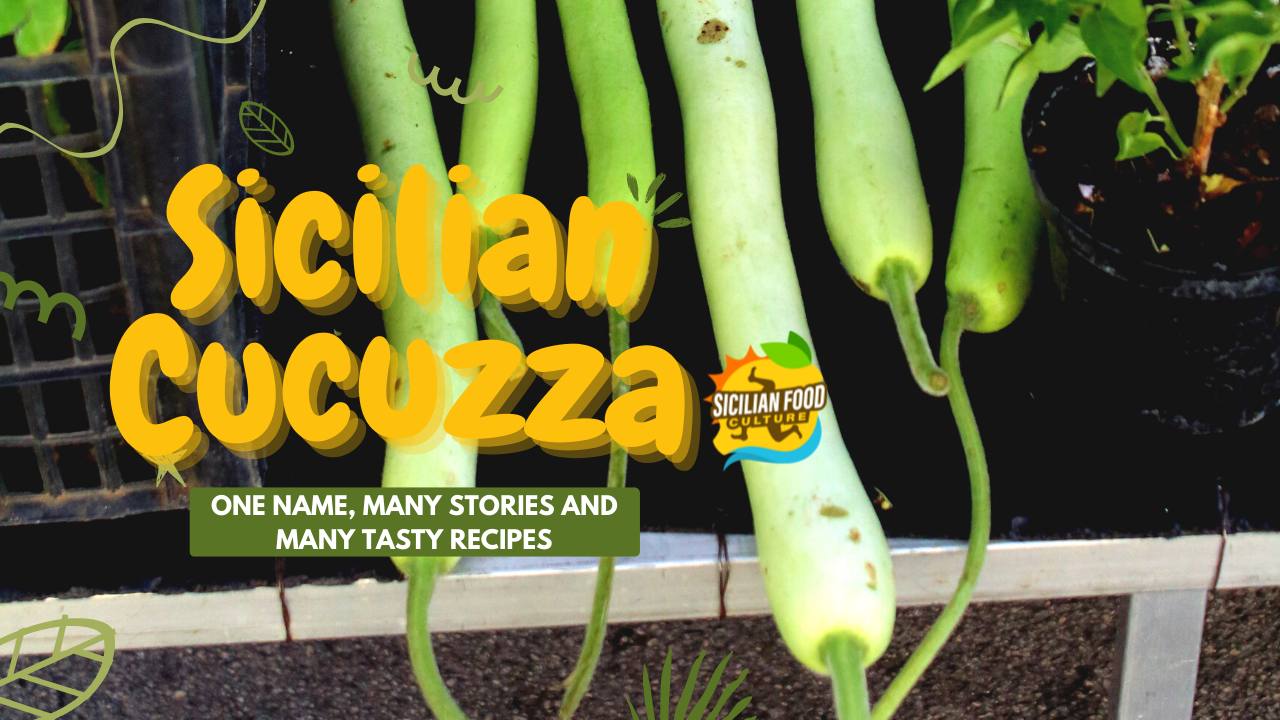
The tenerumi, “tinnirumi” in dialect, are the tender leaves that grow at the top of the cucuzza longa, the characteristic elongated gourd cultivated in Sicily since antiquity. This is a vegetable found almost exclusively on the island, and for this very reason known in the rest of Italy only through Sicilian cooking, with the sole exception of certain areas of South Asia.
It is precisely this rarity that makes it a profoundly local ingredient, difficult to find elsewhere and impossible to replace.
Origins and Spread Across the Island
The minestra with tenerumi has thus become one of the most representative recipes of Sicilian cuisine. Its origins are traced back to the Ragusa area, before spreading across the entire island, adapting to the different local customs and habits.
Though a summer ingredient and a versatile one, excellent also sautéed in a pan with oil and lemon, or with anchovies and chilli pepper, the tenerumi find their most authentic expression in the minestra, the dish no Sicilian could ever give up. Even at forty degrees in the shade, no amount of heat can dislodge it: this minestra continues to occupy a fixed place on the Sicilian summer table, enjoyed also cold the following day. This apparent contradiction is resolved by the nutritional qualities of this particular vegetable: easy to digest for its delicate consistency, refreshing and light, eaten precisely to give the stomach a rest.
The Traditional Recipe: Few Gestures, Immediate Cooking
In keeping with its popular origins, the preparation of the traditional recipe, across much of Sicilian territory, follows a simple and essential practice, made up of few gestures and an immediate kind of cooking, tied to the rhythms of domestic everyday life.
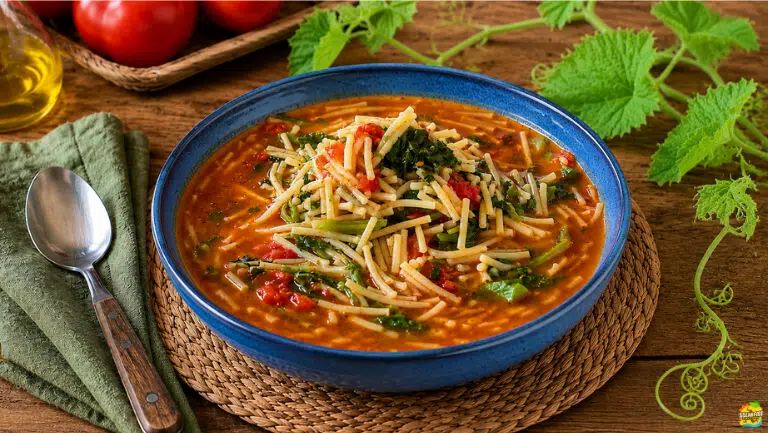
It begins with the immersion of the tenerumi in boiling salted water; their cooking proceeds slowly, for as long as it takes for the leaves to release their flavour into the broth. The spaghetti, broken by hand, are then added, gradually absorbing the flavour, until a soft and enveloping consistency is created, suspended between minestra and pasta asciutta.
Once ready, in many traditional preparations the dish is finished with a drizzle of extra virgin olive oil poured raw, while in others fresh tomato, garlic or small cubes of aged caciocavallo are added, enriching the preparation with a more intense and decisive aroma.
Looking for the full recipe? Check this out!
Contemporary Reinterpretations: New Identities of a Classic Dish
Alongside this original version, simple, deeply rooted in tradition and easily reproducible, numerous creative and contemporary reinterpretations have developed over time, elaborated by local chefs, responsible for spreading a new identity of the classic minestra with tenerumi. Among these, particularly interesting is the proposal of Sicilian gastronome Martino Ragusa, who in his recipe book offers a more structured reworking of the dish, enriching it with additional ingredients and more complex preparation techniques. In this version, the vegetables are sautéed in oil with garlic and tomato, to which potatoes, courgettes and cheese rinds are added, until a richer and more concentrated base is obtained on which the pasta is then cooked.
Also among the contemporary reinterpretations is that of Palermo-based chef Natale Giunta, who, while remaining faithful to the use of traditional ingredients, proposes a more complex and sophisticated preparation, capable of restoring to the minestra a new interplay of flavours and textures. Compared to the more essential version of the domestic tradition, the recipe is enriched with additional steps and processes that deepen both its form and its taste.
The preparation begins with making the sauce: the tomatoes are blanched, peeled and blended, added to a pan with extra virgin olive oil, a clove of garlic and a pinch of chilli pepper, until a dense and compact consistency is achieved. Meanwhile, the tenerumi leaves are washed, drained and cut, then quickly blanched. Once ready, the excess water is removed and the broken pasta is added, cooking directly in the vegetable broth. Halfway through cooking the tomato sauce is incorporated; the dish is then finished with fresh basil, a grind of black pepper and a few pieces of aged caciocavallo.
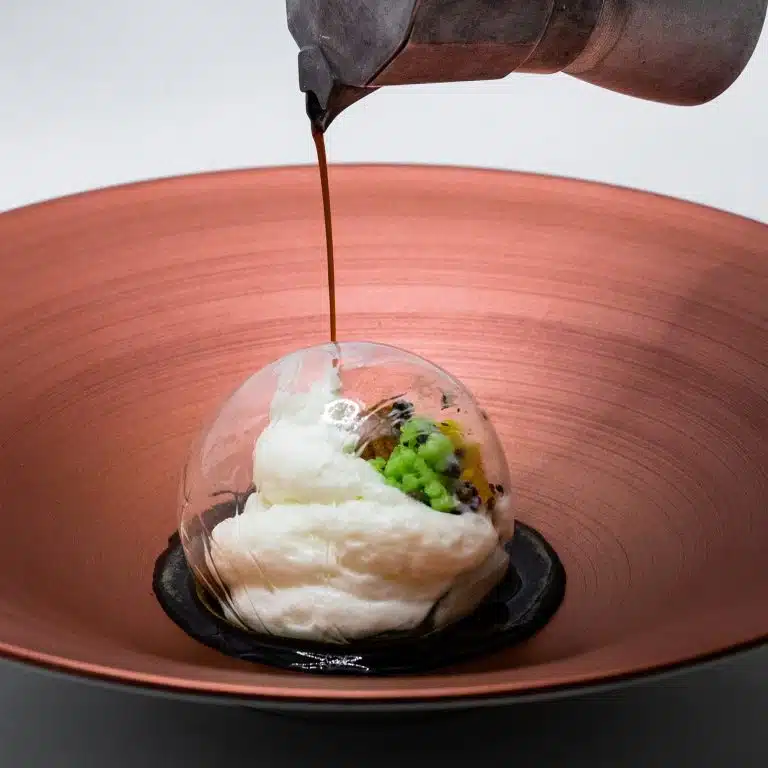
Then there is the reinterpretation of chef Nino Ferreri, presented at his Sicilian restaurant in Bagheria. The chef offers a contemporary and sophisticated reading of the dish: fresh pasta parcels filled with tenerumi and caciocavallo, served with cold tomato water, creating a contrast of temperatures and textures that entirely reimagines the original flavour.
The Tenerumi: The Thread That Holds Every Variation to Its Origin
Thus, the complexity of these reinterpretations shapes not only the form of the dish, transformed by the introduction of new techniques and ingredients, but also its identity. What changes, in fact, is the very way in which the minestra is perceived and narrated: from a poor, domestic and popular dish, it opens onto a different dimension, more refined and contemporary, one that replaces the connotation of “simplicity” with that of “gourmet”, favoured by the world of Michelin-starred chefs.
What remains unchanged, however, is the dish’s deep identity: the tenerumi, an indigenous and unmistakable ingredient, remain the thread that connects every variation to its origins, keeping alive the ritual and symbolic memory of the Sicilian minestra.

Authentic Sicilian ingredients, delivered to your door
Shop Bronte pistachios, artisan pasta, extra virgin olive oil and more on Dolceterra.com — use code SICILIANFOODCULTURE10 for 10% off your order.
If you enjoyed this article, consider supporting us with a small donation — it helps keep the site running!
 Buy us a Cannolo!