There’s a scene in the Italian TV series Il Commissario Montalbano where the detective sits down to an enormous tray of baked pasta and is asked whether he would have eaten the whole thing by himself had his colleagues not shown up. His answer? “Perché, c’è qualcosa di male?” — “Why, is there something wrong with that?”
It’s hard to argue with him. The dish in question is pasta ‘ncasciata, and once you understand what goes into it, you’ll understand Montalbano completely.
What is pasta ‘Ncasciata?
Pasta ‘ncasciata is a baked pasta dish that originated in the province of Messina, in the north-east of Sicily. It belongs to the great family of Sicilian pasta al forno (oven-baked pastas), but it takes things further than most. Think of it as a layered bake rather than a simple pasta gratin: meat ragù, golden fried aubergine, caciocavallo cheese, hard-boiled eggs, and salami, all stacked between layers of pasta and baked until bubbling and bronzed on top.
It is, without question, a piatto unico, a complete meal in one dish.
Why is it called ‘Ncasciata?
The name is a point of friendly debate. One theory links it to the old Sicilian word for the deep pot (cassa) traditionally used to assemble the layers. Another, perhaps more charming, explanation connects it directly to caciocavallo, the Sicilian fresh cow’s milk cheese that melts into long, stretchy strings and gives the dish its signature pull. ‘Ncasciata from cacio (cheese): it’s not officially confirmed, but it feels right.
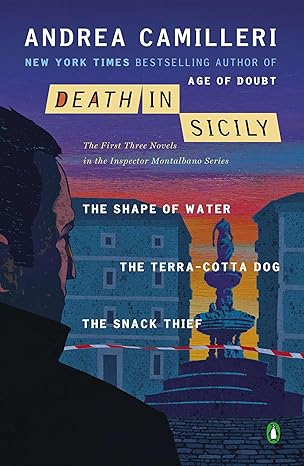
The Inspector Montalbano Mysteries
Andrea Camilleri’s beloved detective series — set in Sicily, full of food, sun, and intrigue.
Messinese vs Palermitana: What’s the Difference?
Like most beloved Sicilian dishes, pasta ‘ncasciata exists in more than one version depending on where you are on the island.
The Messina version: the one Montalbano eats, and the one in this recipe, uses a proper meat ragù, built with minced beef softened in onion and deglazed with white wine. It is rich, satisfying, and deeply savoury.
The Palermo version takes a lighter approach, skipping the meat altogether in favour of a simple tomato sauce with garlic and basil. Both are wonderful; the choice mostly depends on how hungry you are.
The Key Ingredient: Caciocavallo Siciliano
No ingredient is more essential to pasta ‘ncasciata than caciocavallo. This pear-shaped cheese, typically made from cow’s milk and aged to varying degrees, has a mild, slightly tangy flavour when fresh and becomes more assertive with age. In this recipe, fresh caciocavallo is used: it melts into the layers and forms that irresistible golden crust on top.
If you’re outside Italy and struggling to find it, look in Italian delis or specialist food shops. It’s increasingly available online too, well worth tracking down for the real experience.

Find authentic Sicilian ingredients
Caciocavallo, Sicilian pasta, olive oil and more — sourced directly from the island. Use code SICILIANFOODCULTURE10 for 10% off your first order.
How to serve it
Do as the Sicilians do: bring the whole baking dish to the table. That moment of unveiling,the bronzed, bubbling top, the steam rising, the smell of fried aubergine and melted cheese, is part of the experience.
Let it rest for at least ten minutes before serving. The layers need time to settle, and the cheese will be dangerously hot straight from the oven. Pasta ‘ncasciata is also excellent cold the following day, which makes it ideal for preparing ahead if you’re cooking for a crowd.
Pair it with a glass of Sicilian red: a Nero d’Avola is the natural, unfussy choice.
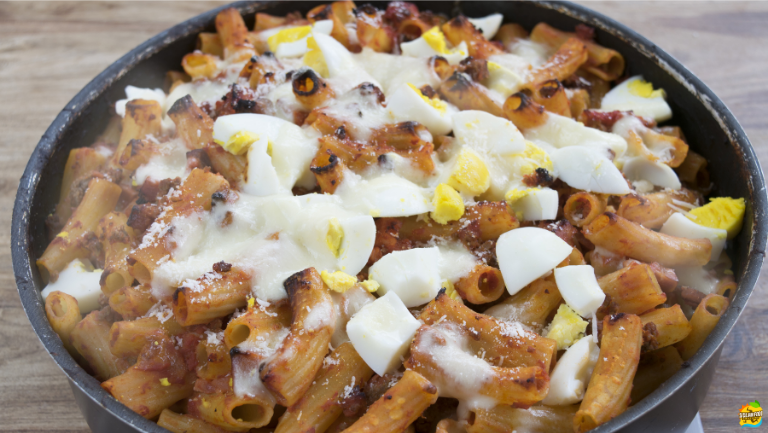
Pasta ‘Ncasciata: The Baked Pasta That Inspector Montalbano Can’t Resist
Course: PastaDifficulty: Medium6
servingsIngredients
600gr pasta (maccheroni or rigatoni)
4 aubergines (eggplants)
200gr minced beef
200gr caciocavallo cheese
100gr grated pecorino
50gr mortadella or salami, diced
2 hard boiled eggs
Tomato passata (1 can)
Half glass white wine
Basil
EVO Oil
Salt
Pepper
Directions
- Slice the aubergines and soak them in salted water for about an hour to remove any bitterness. Drain and fry them in plenty of hot oil until golden, then place them on paper towels to remove excess oil. You can keep the slices whole or cut them into cubes once cooked.
- In the meantime, sauté some chopped onion in a pan, add the minced meat and cook for a few minutes, deglazing with white wine. Stir in the tomato sauce and let it simmer. Boil the pasta and drain it while still al dente, then toss it with a portion of the sauce, keeping the rest aside.
- Lightly grease a large baking dish with extra virgin olive oil and sprinkle it with breadcrumbs. Start layering by adding a base of pasta, then top with fried aubergines, grated cheese, basil leaves, eggs, caciocavallo, and mortadella (either sliced or diced). Continue layering until all ingredients are used, finishing with a final layer of pasta.
- Top the last layer with aubergines, a bit of the remaining sauce, and a generous amount of grated caciocavallo. Bake in a preheated fan oven at 180°C (350°F) for about 20 minutes, until the cheese has melted and formed a golden crust on top.
Authentic Sicilian ingredients, delivered to your door
Shop Bronte pistachios, artisan pasta, extra virgin olive oil and more on Dolceterra.com — use code SICILIANFOODCULTURE10 for 10% off your order.
If you enjoyed this article, consider supporting us with a small donation — it helps keep the site running!
 Buy us a Cannolo!