Sicilian Easter Traditions and Holy Week Celebrations
In Sicily, Easter is not just a religious holiday: it is one of the most intense and identity-defining moments of the year. These days are a blend of faith, collective memory, family ties and a sense of belonging. This is demonstrated by the profound participation with which, during Holy Week, the Sicilian people renew a rich symbolic heritage of festive rituals every year, such as ceremonies, processions and culinary traditions.
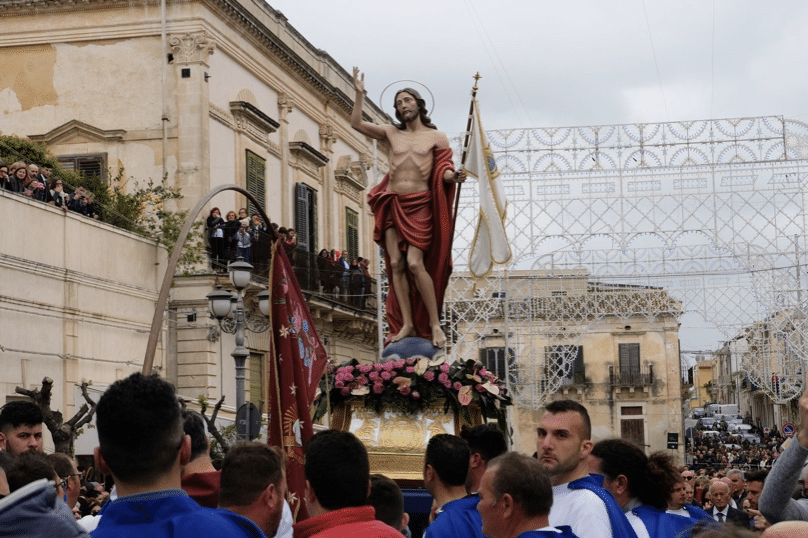
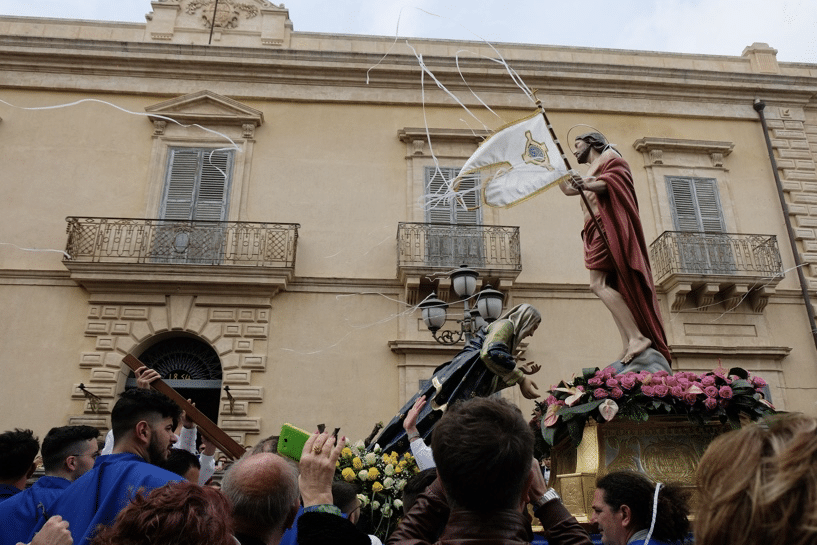
It all begins with Palm Sunday, which this year falls on 29 March, when Sicilian cities such as Ragusa, Enna, Trapani and Palermo, as well as towns such as Ganci, Caltabellotta and Misilmeri, become the setting for religious and popular traditions handed down from generation to generation. Each town on the island has its own way of celebrating Holy Week.
It is a time when the religious dimension intertwines with the secular and social, during which families, brotherhoods, parishes and associations come together to stage a festive theatre of salient episodes from sacred history and purificatory and penitential rites until Easter Day.
Lavureddi: The Symbolic Wheat Sprouts of Sicilian Easter
A symbol of rebirth and a return to abundance after the long season of Lent, a period of spiritual preparation, conversion and penance, Sicilian Easter is marked by the revival of evocative symbols that clearly recall the reawakening of nature and the renewed abundance of food.
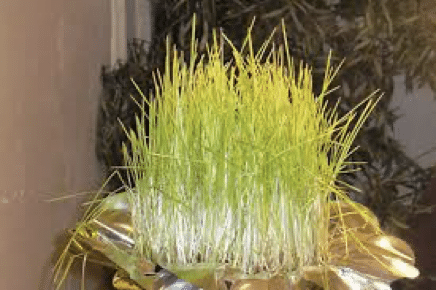
The celebrations begin with the blessing of palm and olive branches on Palm Sunday. During Holy Week, wheat or lentil sprouts, known in Sicilian as lavureddi, make their appearance, decorating the symbolic tombs on Maundy Thursday alongside oranges arranged on votive tables.
According to tradition, these sprouts are grown in the dark by the faithful in the preceding weeks to symbolise the sense of anticipation and silence, symbolising the promise of rebirth.
Cuddura: The Traditional Sicilian Easter Bread
It is clear that this is not just about food. In these foods, the symbolic function far exceeds the strictly nutritional one: breads, in the forms and rituals that accompany their preparation and consumption, embody the values and meanings of the festival. At the same time, they become true symbols of identity, capable of expressing a specific time of year and a well-defined place, intertwining devotion, memory and tradition (cf. Giallombardo, 2003; Buttitta I., 2020).
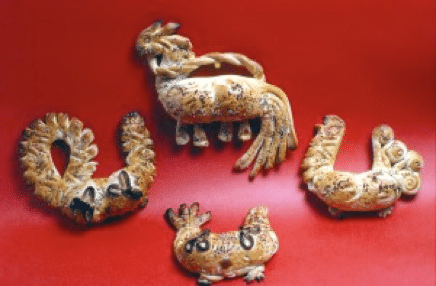
They are presented in a remarkable variety of shapes, weaving together Christian and early Christian symbols: rings, angels, bells, cockerels, doves, crucifixes and scenes from the Passion. They tell the story of Christ while also celebrating the triumph of life brought forth by the Resurrection.
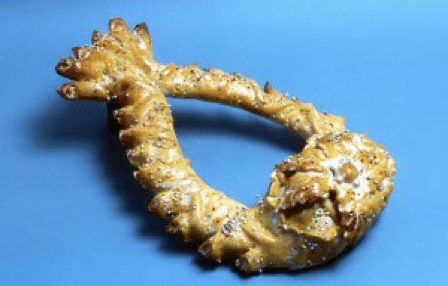
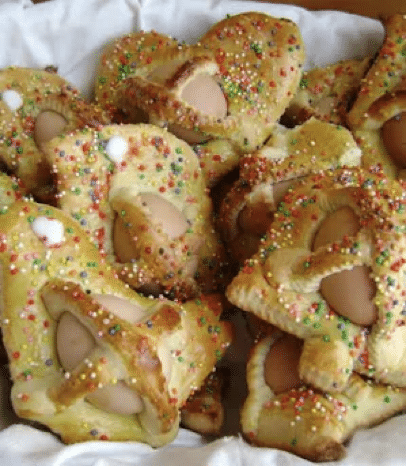
Not only are these breads represented and valued as symbols, but they are also prepared and shared, becoming an integral part of the Easter table. Among the most popular and iconic is the Cuddura cake, a doughnut made of shortcrust pastry or braided bread, decorated with colored sugar and hard-boiled eggs placed in the center.
Of ancient origin, dating back to the Greek-Byzantine period, the Cuddura is a votive bread, both a symbol and a food, closely linked to rural tradition and the symbolism of the Resurrection. Its name derives from kollour, the crown-shaped bread offered to the gods in religious rituals as a gesture of devotion and a request for protection.
Cassatelle: Traditional Sicilian Easter Desserts
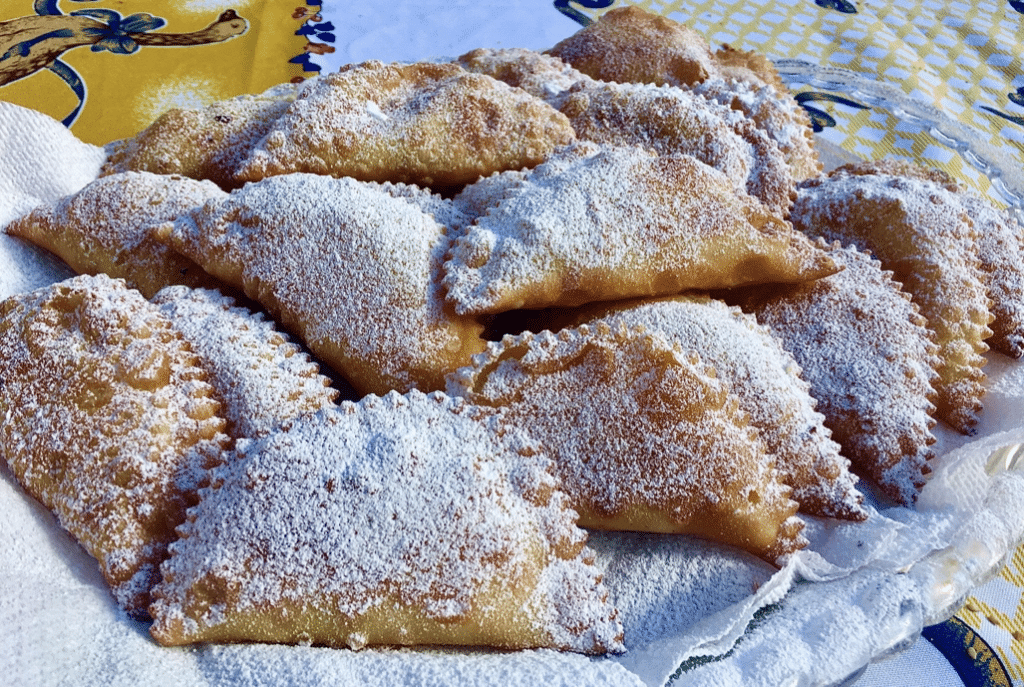
But the most typical Sicilian Easter sweets, originally typical of the working classes, are cassatelle, called “cassateddi” in dialect. These are fried ravioli made with flour, ricotta cheese and sugar, and in some variations flavoured with cinnamon. According to tradition, cassatelle are made on Good Friday, so that they are ready for Easter lunch and not before.
These sweets are particularly popular in the provinces of Trapani and Ragusa, and especially in the town of Castellammare del Golfo, where they are a symbol of the Easter tradition. Depending on the location, their recipe varies in terms of both ingredients and shape. For example, in Ragusa they are fried in the shape of a basket and therefore called “panareddi”, made with buckwheat flour mixed with a few drops of lemon juice and white wine, while in Trapani they are usually baked in the shape of a crescent with a filling of ricotta, sugar and chocolate chips, or made with bean cream, typical of the village of Trappeto.
Why Easter Is So Important in Sicilian Culture
In this context, the Easter celebration is not limited to preserving religious rites, but is a concrete expression of a shared cultural heritage. In addition to re-establishing time and celebrating the triumph of life over death, the Easter festival therefore plays a fundamental role in Sicilian society.
Its rituals, traditions, and culinary customs, from symbolic desserts to recipes handed down through generations, are not just moments of devotion, but also powerful instruments of social cohesion, capable of reinforcing the bonds within the community and its collective identity.
Sicilian Easter traditions are a unique blend of faith, symbolism and food culture. From the symbolic lavureddi sprouts to iconic desserts like cuddura and cassatelle, Easter in Sicily continues to preserve centuries-old rituals that connect families, communities and generations.

Authentic Sicilian ingredients, delivered to your door
Shop Bronte pistachios, artisan pasta, extra virgin olive oil and more on Dolceterra.com — use code SICILIANFOODCULTURE10 for 10% off your order.
If you enjoyed this article, consider supporting us with a small donation — it helps keep the site running!
 Buy us a Cannolo!