

Food is interaction and conviviality. It is a social and cultural act, capable of organising relationships, roles, and forms of belonging.
Easter lunch in Sicily is perhaps one of the most emblematic expressions of this: a moment in which food is not just nourishment, but becomes a tale of tradition, identity, and sharing.
On this day, food, the places it comes from, and those who consume it are linked in a single collective discourse. It is the time of year, in fact, when relatives and friends eat together in a rich and convivial experience, which breaks the monotony of meals consumed alone, restoring food’s identity, that of collective sharing.
It is precisely within this shared dimension that Easter lunch in Sicily stages a true experience characterized by a wide range of dishes, ingredients, and culinary techniques typical of Sicilian gastronomy.
It is an immersive journey of flavors, recipes, and familiar rituals, a culinary narrative marked by a carefully timed sequence in which each dish occupies its own place and carries its own meaning. The individual dishes, prepared according to tradition, become the actors that shape each diner’s gastronomic experience, anchoring it in a specific time and place.
The clinking of glasses, the clatter of plates, voices intertwined between kitchen and table: the meal begins.
The Antipasti
The first course is the appetizers, making a gentle entrance: a collection of preparatory tastings that immediately capture everyone’s attention, leading up to the communal meal. Small plates filled with pickled vegetables, carefully prepared and preserved the previous summer, always accompanied by cheeses, traditional cured meats, olives, and homemade bread.
But that’s just the beginning.
Shortly afterward, fried meatballs, a typical Sicilian dish made with tomato sauce and pecorino cheese, make their debut.
And of course, no appetizers spread would be complete without eggs, symbols of both religious and secular traditions and expressions of rebirth and the arrival of spring.
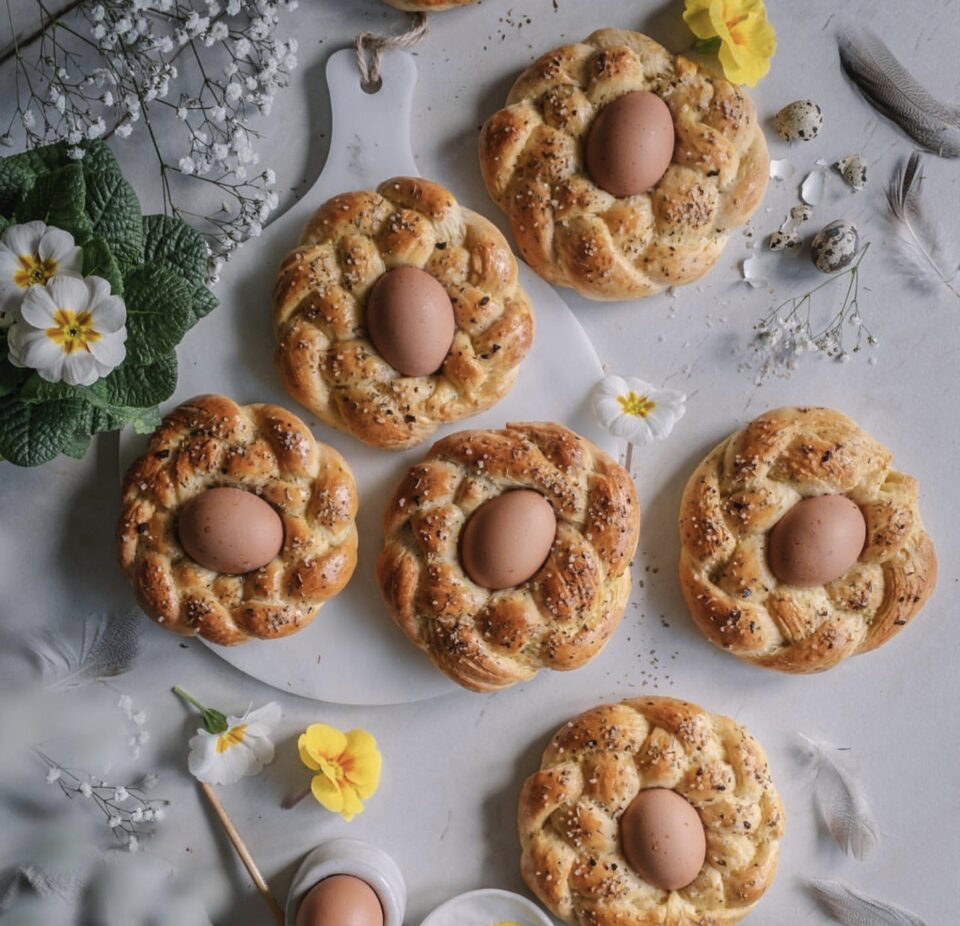
According to tradition, they can be eaten hard-boiled as a main course or used as an ingredient in a typical Sicilian Easter bread of Greek origin, called “cuddura cu l’ova”.
This preparation exists in various forms throughout the peninsula, but in Palermo, cuddure are particularly distinctive. They are made either with a tasty leavened dough or a sweet shortcrust pastry, and enriched with whole boiled eggs, symbols of renewal, prosperity, and fertility. Learn more here ->
The First Courses
At this point, we are still in the early stages of this story: the Sicilian Easter meal has just begun, and once the antipasti are finished, the first courses take center stage, protagonists of a tradition renewed every year through faithfully passed-down recipes.
According to Sicilian tradition, first courses can be prepared in various ways, depending on the locality. Among the most common are baked pasta dishes, such as lasagna, cannelloni, and pasta al forno. Another classic Easter dish in Sicily is “pasta ’ncasciata”: baked macaroni stuffed with fried eggplant, meat ragù, and caciocavallo cheese
Curious about the Pasta ‘ncasciata?
Check the recipe here!
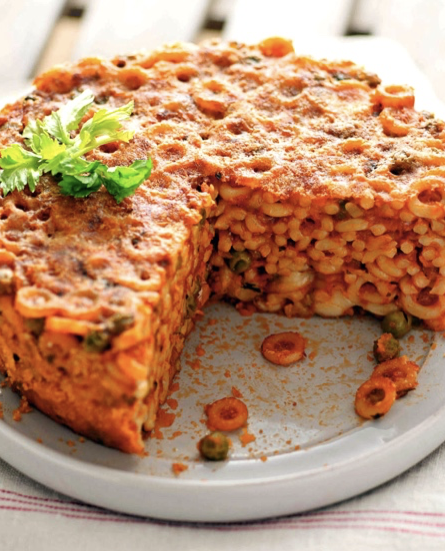
In Palermo, Easter would not be complete without the traditional baked “anelletti”, one of the most emblematic dishes of the holiday, symbolizing conviviality and culinary delight. It is more than just a dish; it is a true domestic ritual. The small pasta rings are seasoned with a rich meat ragù, peas, and typical Sicilian cheeses such as caciocavallo or pecorino, and depending on family tradition, sometimes enriched with fried eggplant or boiled eggs. Once mixed, the pasta is carefully arranged in a baking dish and cooked slowly until it forms a golden, compact crust, reminiscent of a timbale.
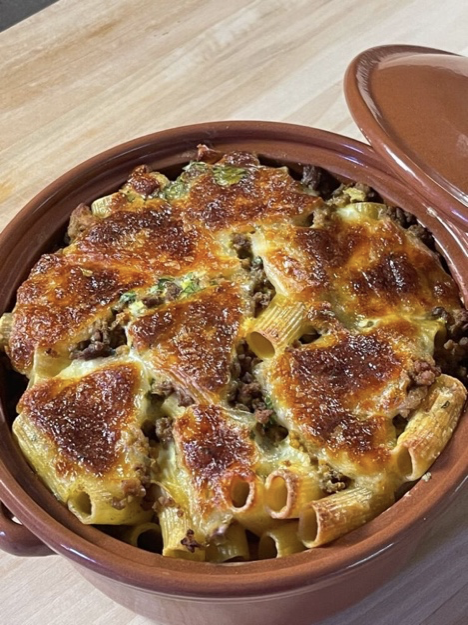
In Agrigento and its province, the star of the first courses is the “tegame di Aragona” (called in sicilian U taganu o tianu di Aragona, località di Agrigento in Sicilia): ancient recipe cooked on Holy Saturday and eaten until Easter Monday. It’s baked in a terracotta dish, called a “tianu”. It’s made with pasta and mixed vegetables, flavored with cinnamon.
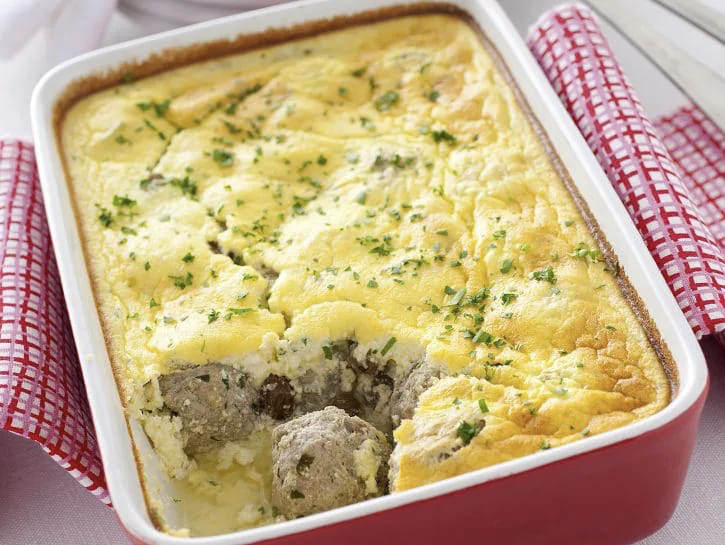
In Messina, however, a special dish is prepared every year according to popular tradition, called “u sciusceddu”: a flan made with meatballs and ricotta. Its origins are ancient, with roots in the monastic cuisine of the province of Messina. According to legend, it was the dish the nuns prepared to break the Lenten fast, meant to invigorate both body and spirit on Easter Sunday.
Once the first courses are finished, Easter lunch moves on to the second courses. These vary from region to region, yet are united by a common theme: lamb or goat, ever-present stars of Mediterranean cuisine, symbolizing the Easter sacrifice and redemption.
Very popular in Palermo as an undisputed icon of the island’s cuisine is “aggrassato” lamb, an ancient recipe that reflects Sicily’s rural traditions. Its preparation still follows the original method: the lamb is cooked in tomato sauce or stewed, always served with diced potatoes.
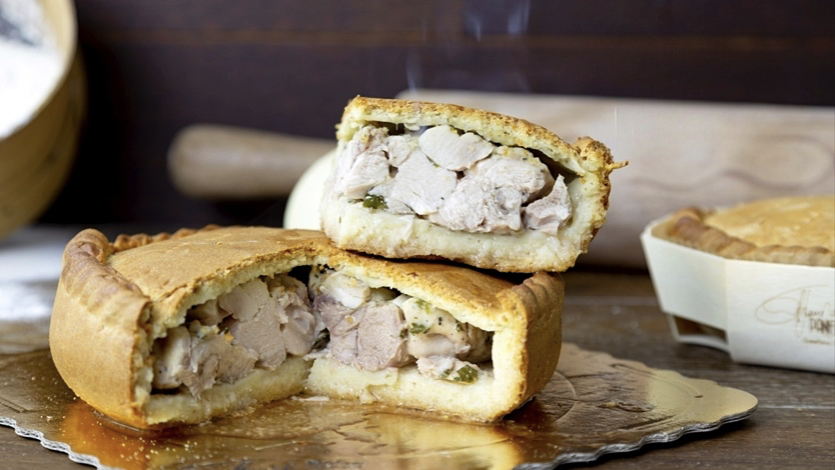
In the Ragusa area, lamb takes center stage as the main ingredient in the “impanata” filling, a dish with numerous variations found across the world, whose origins trace back to Arab and Spanish culinary traditions. This flatbread, made from bread dough and stuffed with lamb, garlic, parsley, and oil, reflects a cuisine that, like a language, carries centuries of cultural influences.
But the story doesn’t end there. In Trapani, another rich lamb preparation is traditionally made, with the meat cooked alongside mint, garlic, and sweet-and-sour vinegar, a combination that balances the dish’s robust flavor.
The Desserts
And just when it seems you’ve had your fill, it’s time for the big end: the desserts, the true heroes of Easter lunch, make their almost theatrical entrance, one after the other, in a time that stretches until the early hours of the evening.
Sweets are the stars of every celebration, but in Sicily, Easter truly lets your imagination run wild in a riot of flavors: a universe of recipes that reflect a rich history of exchanges, influences, and encounters between peoples and cultures.
Among the most unique and characteristic are sweets made with almond paste, sugar, water, and spices, without them, Easter in Sicily would truly not be the same. One of the most common is the Easter lamb, known in Palermo as the “pecorella.” More than just a dessert, it is a symbol of sacrifice and serves as both a religious and secular emblem of the region’s Easter traditions. Its history is ancient: in times past, it was the sweet offered as a gift to bishops, cardinals, queens, and viceroys.
Its preparation requires time, patience, and attention and occurs in two phases: the first involves shaping the almond mixture (often bitter almond or vanilla), the second involves decorating it, usually with a variety of edible colors, sugared almonds, and a small red paper flag, traditionally called a “labaro.”
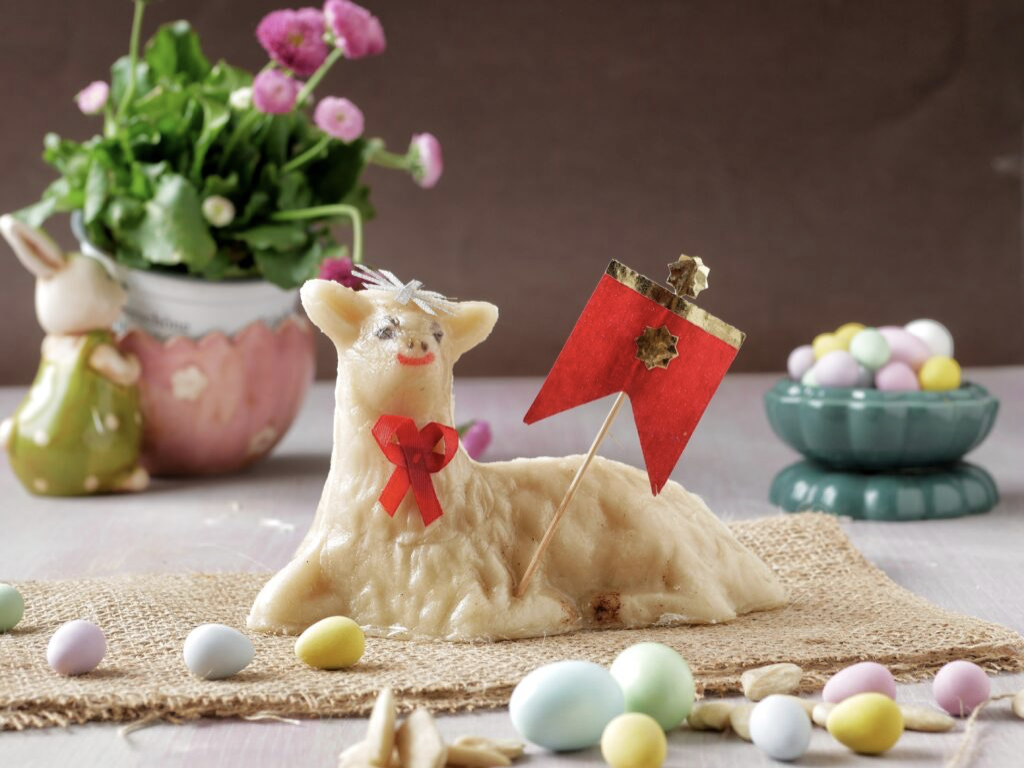
With its perfect shape and intense flavor, this dessert is enjoyed in small portions due to its sweetness, and is always accompanied by another traditional favorite: the Sicilian cassata, the island’s iconic Easter treat.
Cassata is a celebratory dessert of Arab origin, prepared in two main variations. The first, the “traditional” version, is made with sweetened sheep’s ricotta, sponge cake, and marzipan, decorated with candied fruit in an almost theatrical style. It requires no baking, except for the sponge cake, and its flavor is creamy and extremely sweet.
The second variant, older than the first, is baked in the oven and served warm. Known as the “pasqualina,” it is especially popular in Palermo and Ragusa. Unlike the first version, it follows a simpler recipe, with shortcrust pastry filled with ricotta, chocolate chips, and often a layer of sponge cake. Traditionally, the exterior is simply dusted with powdered sugar, giving it a modest appearance but a crunchy, fragrant, and not overly sweet flavor.
For both variants, the cassata reproduces a real scenic show, containing a ritual gesture, rich in meaning and identity value.
At the end of the meal, it is placed at the center of the table, admired by every diner, before finally being cut and shared. The entire ritual is carried out with deliberate slowness, highlighting and marking the meal’s final phase: a celebratory moment in which the flavors of every dish come together in perfect harmony, leaving a lasting memory of an unforgettable experience.

Authentic Sicilian ingredients, delivered to your door
Shop Bronte pistachios, artisan pasta, extra virgin olive oil and more on Dolceterra.com — use code SICILIANFOODCULTURE10 for 10% off your order.
If you enjoyed this article, consider supporting us with a small donation — it helps keep the site running!
 Buy us a Cannolo!



Made the capponata, just like my Nonna and my mom did. Sure brought great memories to me.